Two new live decks join the shop today, and this time they speak the language of the Balkan card table. Hungarian Puszta has the hearts, acorns, bells and leaves of the “mađarice”, and Venetian Carnival the coins, cups, batons and swords of the Triestine cards. The suits sit on the same cards as in the Hungarian and Triestine decks you already know, so you read your hand at a glance, but every card is drawn new, both decks have their own back, and they come alive at the table. Each costs 400 pesos.
Hungarian Puszta
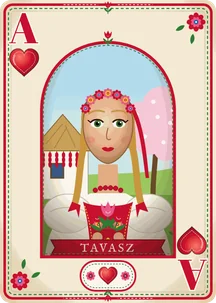
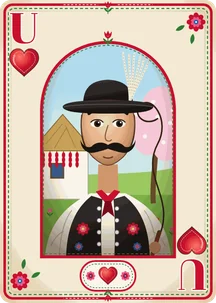
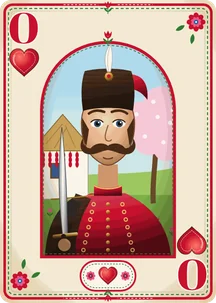
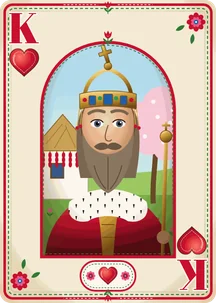
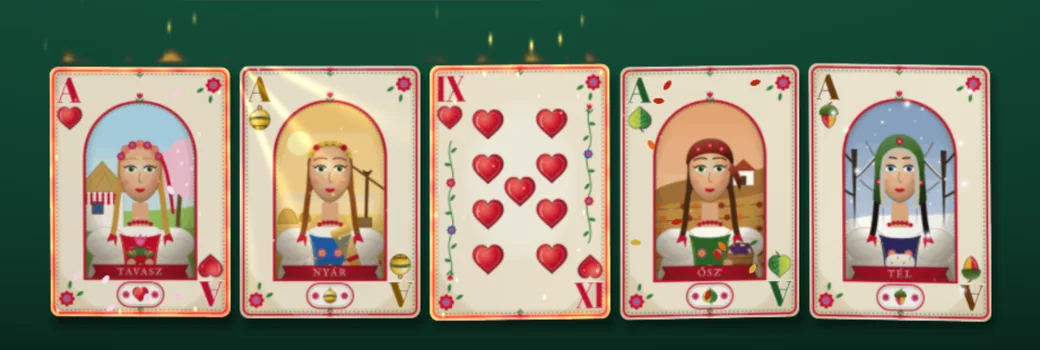
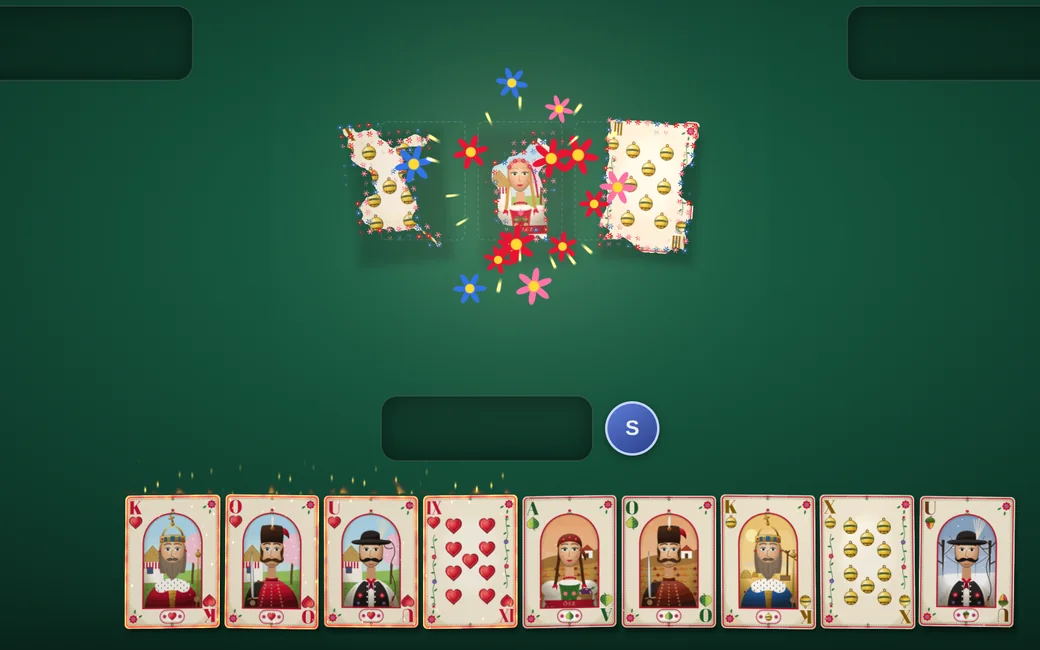
Ivory paper with a Matyó embroidered border of red, pink and blue flowers. As on real Hungarian cards, the aces are the four seasons, as girls in folk dress with the Hungarian name of their season on a ribbon: hearts are spring (TAVASZ), bells summer (NYÁR), leaves autumn (ŐSZ) and acorns winter (TÉL). The unter is a csikós, a horse herder with a whip and a crane-feather hat, the ober a hussar with sabre and fur kalpak, and the king wears ermine and the Holy Crown with its bent cross. Every suit has its own scene: hearts a csárda with strings of paprika in spring, acorns an oak wood in winter snow, bells a wheat field with a well sweep, and leaves a vineyard in autumn. The corners read VII, VIII, IX, X, A, U, O and K.
- Signs that come alive. Point at a card and its suit signs move: the heart beats, the acorn and the bell swing, and the leaf flutters in the wind. The figures wink at you.
- The four seasons. Point at an ace and it brings its season over the card: spring petals, the summer sun, falling autumn leaves or winter snow.
- Paprika embers. Trump cards smoulder paprika-red at the edges under a small hearth fire with sparks.
- Embroidered flowers. A trick taken with a trump comes apart into little embroidered flowers, in a burst of Matyó flowers.
Venetian Carnival
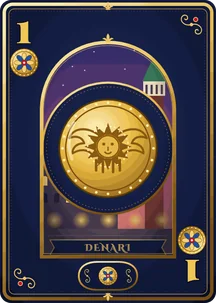
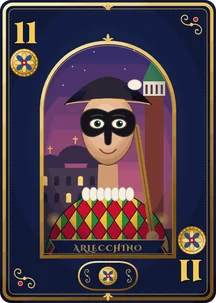
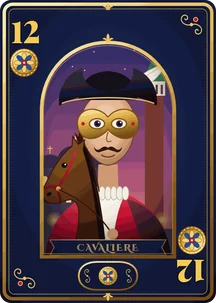
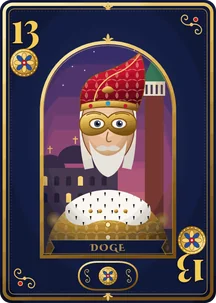
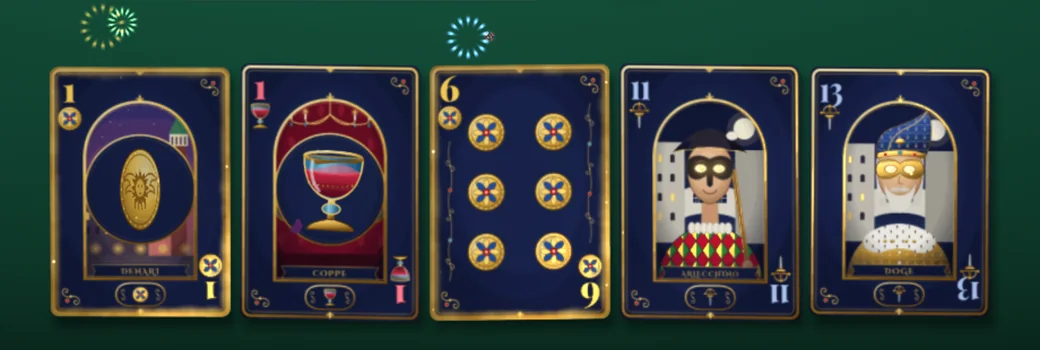
Midnight-blue velvet in a gilt mirror frame, numbered like the Triestine cards: 4 to 7, then 1, 11, 12 and 13. The ace is a big suit sign on a medallion: a gold ducat with the winged lion of St Mark, a Murano goblet of wine, a striped Venetian mooring pole with a mask and ribbons, and a rapier across a white mask. The fante is Arlecchino in his diamond suit and black mask, the cavallo a masked cavalier on his horse, and the re the doge in the corno ducale with a gold mask: every figure wears a carnival mask. Every suit has its own Venice: coins St Mark's Square at dusk, cups a palazzo ballroom under a Murano chandelier, batons the Grand Canal with a gondola, and swords the Bridge of Sighs by night.
- Everything moves. Point at a card and the coins spin, the wine laps in the cups as they rock, the batons twirl, and the swords lift and flash.
- Golden eyes. The eyes behind the masks light up gold, with glitter.
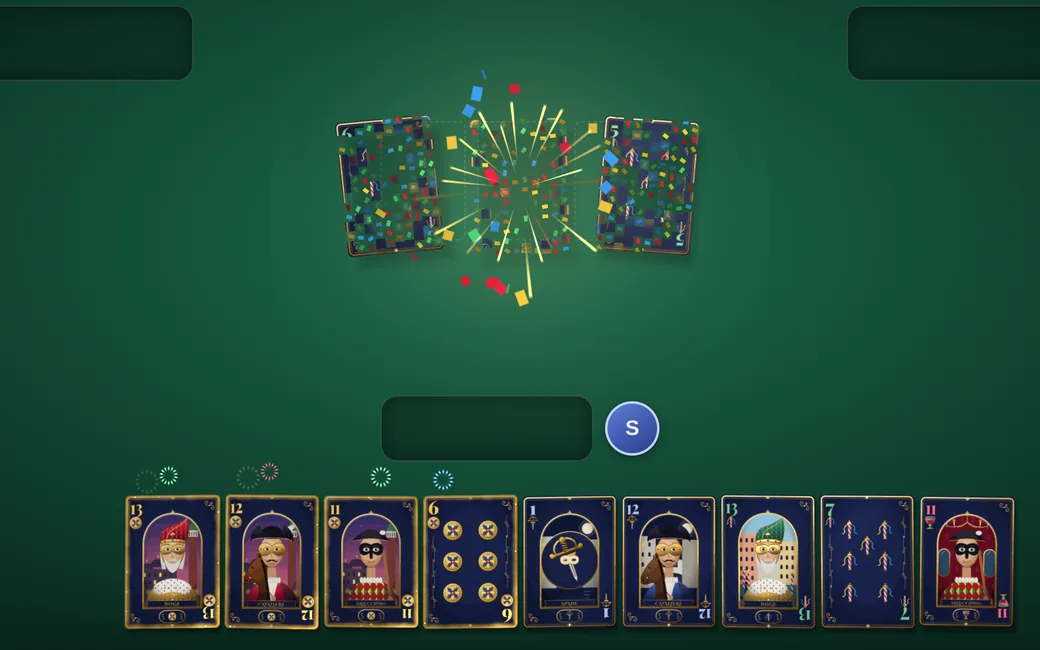
- Gold leaf. Trump cards are gilded with gold leaf from the edges, with glitter, under small fireworks.
- Confetti. A trick taken with a trump breaks into confetti, with a firework of gold sparks.
How to get them
Both decks are in the shop under Cards, for 400 pesos each. Every deck has a preview at a real Mexico table, and once you unlock it, it stays yours; you can switch between your decks at any time. Pesos are earned at the table — by finishing public and mini games, with daily missions, your daily streak, badges, new titles, the weekly leaderboard and tournaments — and they are never sold.
All twelve decks are side by side in the shop guide. The story of the two suit systems is on the Hungarian cards and Triestine cards pages.